I was perusing the web and came across an article on Square and their credit card reader. Apparently, a rival company's CEO, not some marketing weasel, decided to announce that there were security problems with the system and to be aware of it.
The guy produced a YouTube video that showed how an alternate program was created and run on the iPhone which looks like the Square app but can be used to take credit card numbers after they have been swiped and can, get this, store them so that they can be used again (illegally, of course). Someone should have told this guy that there already was a technology out there that has been around for ages that does the exact same thing; its called a pencil and paper.
If someone wanted to keep that information and exploit it, the user gave them the card already, just as they would while using their rival system.
So in the end, this CEO comes across as such an arrogant ass for producing a video that shows how a rivals software can be exploited and then puts the software out there as a proof that this can be done, opening up himself and his company up to all kinds of lawsuits and proving nothing more than that he is scared of Square.
FUD is short for "Fear", "Uncertainty" and "Doubt", which is a classic marketing gimmick to create these feelings in customers to get them to not use your rivals product, which will get them to use yours. This guy failed big time and should probably be shown the door. Horrible PR mess this guy has created for himself and his company.
Here is the story, its a great read. Click Here

Wednesday, March 9, 2011

Saturday, January 8, 2011
New Starbucks Logo
Starbucks changed its logo this week, the first change in 19 years. The graphic below shows the progression.

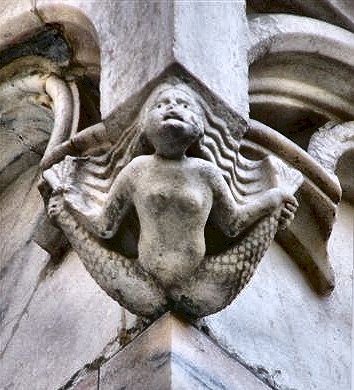
As a side note, I came upon, what could very well be the inspiration for the logo. Its from a building in Milan, Italy.


As a side note, I came upon, what could very well be the inspiration for the logo. Its from a building in Milan, Italy.
Tuesday, January 4, 2011
Great Design Diagram
This is from a fellow Designer named Colin Harman, you can get one of these at his online shop Here.


Saturday, November 7, 2009
Resolution
I'm not talking about a New Years resolution, the kind you break a few weeks after you make it. I'm talking about resolution as it applies to images and graphics. Any raster image has resolution. What? What's Raster you say? Well, there's two different types of graphic images, Raster(-based) and Vector(-based).
Let me give you a few examples:
A Vector image is made up from primitives such as points, lines, curves or polygons which are based on mathematical equations. Vector images are very precise and flat.
Raster images are bitmaps. A map of pixels generally formatted into a rectangular grid.
Vector-based graphics are sharp and resolution-independent. So no matter how big you stretch it or blow it up, the resolution will stay the same.
With Raster-based images, the bigger you make it, the more pixels you need so the image doesn't breakdown and become pixellated. (example)
By definition, raster-based files get bigger with the additon of more resolution and vector-based images will stay the same file size always.
When you get a logo done, make sure you get the file in a vector-based format, otherwise it will cost you more to get the file converted to vector, if needed. You can easily convert a vector to raster, but not so easy to convert the other way.
When people take pictures with their digital cameras, the resolution is of vital importance. Many novice users will set their cameras to capture the images in a medium or low resolution setting. This is done to save space since smaller resolution images take up less space and will not fill up a memory card. Sometimes its done because the user is happy with their resolution when they view it on screen and never prints the images.
The important thing about resolution when dealing with a digital camera is that you have a limited opportunity to capture a moment, so you want to get the best image possible. So make sure that the resolution is set as high as the camera allows. You can always down-sample the image later if you want to save it smaller. If you take a small picture from the beginning, you don't have that option.
I can't tell you how many times I get images from people that have been taken off of a web site. The resolution that is found on a web site is 72dpi (dots per inch). Sounds like a lot, but it isn't when you consider that printed media is usually 300dpi. But you say that the image on screen looks just as good as the one on the post card. How could that be? Your eye is much more forgiving of an image that is viewed on a computer screen than on a printed page. As far as the printed image goes, you can get away with 120 or 150dpi just fine, for the most part. But the standard is 300dpi for the best image quality.
So just stretch the image? What? Um, sounds good in theory, but in reality, the quality leaves a lot to be desired. For one, you can't "make-up" pixels. Stretching will just stretch the image and create a pixellated look.
Let me explain it this way; remember when you used to watch TV on a traditional tube? The image was 640 or 800 pixels across. Well now we have HDTV now and if you have watched that in comparison to older TV, you notice how much richer the images are much richer because of the higher resolution. Nobody wants to trade their HDTV in for an old one, its a downgrade. The reason is because that new HDTV offers 1080 pixels across instead of 640 or 800.
Let me give you a few examples:
A Vector image is made up from primitives such as points, lines, curves or polygons which are based on mathematical equations. Vector images are very precise and flat.
Raster images are bitmaps. A map of pixels generally formatted into a rectangular grid.
Vector-based graphics are sharp and resolution-independent. So no matter how big you stretch it or blow it up, the resolution will stay the same.
With Raster-based images, the bigger you make it, the more pixels you need so the image doesn't breakdown and become pixellated. (example)
By definition, raster-based files get bigger with the additon of more resolution and vector-based images will stay the same file size always.
When you get a logo done, make sure you get the file in a vector-based format, otherwise it will cost you more to get the file converted to vector, if needed. You can easily convert a vector to raster, but not so easy to convert the other way.
When people take pictures with their digital cameras, the resolution is of vital importance. Many novice users will set their cameras to capture the images in a medium or low resolution setting. This is done to save space since smaller resolution images take up less space and will not fill up a memory card. Sometimes its done because the user is happy with their resolution when they view it on screen and never prints the images.
The important thing about resolution when dealing with a digital camera is that you have a limited opportunity to capture a moment, so you want to get the best image possible. So make sure that the resolution is set as high as the camera allows. You can always down-sample the image later if you want to save it smaller. If you take a small picture from the beginning, you don't have that option.
I can't tell you how many times I get images from people that have been taken off of a web site. The resolution that is found on a web site is 72dpi (dots per inch). Sounds like a lot, but it isn't when you consider that printed media is usually 300dpi. But you say that the image on screen looks just as good as the one on the post card. How could that be? Your eye is much more forgiving of an image that is viewed on a computer screen than on a printed page. As far as the printed image goes, you can get away with 120 or 150dpi just fine, for the most part. But the standard is 300dpi for the best image quality.
So just stretch the image? What? Um, sounds good in theory, but in reality, the quality leaves a lot to be desired. For one, you can't "make-up" pixels. Stretching will just stretch the image and create a pixellated look.
Let me explain it this way; remember when you used to watch TV on a traditional tube? The image was 640 or 800 pixels across. Well now we have HDTV now and if you have watched that in comparison to older TV, you notice how much richer the images are much richer because of the higher resolution. Nobody wants to trade their HDTV in for an old one, its a downgrade. The reason is because that new HDTV offers 1080 pixels across instead of 640 or 800.


"Free" Business Cards
 Oh, you've seen the little web banner ads that offer free business cards. How could anyone offer free business cards and make a profit? The answer is quite simple, they aren't actually free. Shocked? Dismayed? Maybe even a bit put-off?
Come on, you really didn't think that someone could give away a product for free and expect to stay in business, did you? Maybe you do, maybe you think you are getting one over on the printing industry and you have found a way to get something for nothing. You are an optimist.
An optimist is a person that, against better judgement, still believes that they are exempt from certain absolutes laws. Absolute business law number 1; Nothing is Free.
So how do they do it? How can a company offer to print business cards for free? The printing is "free", but the shipping will cost you. How much? Well, enough to cover the cost of getting cards printed somewhere else. Did I mention the delivery is a bit slow? The standard time to have your free business cards delivered ranges from 2-3 weeks, sometimes more. Of course, you can always upgrade. If you want them sent to you in a few days.
Did I mention that the back of the free business cards have the name of the printing company all over them? Tacky? Well, you can pay to have that removed or better yet, pay some more to put something else on the back. Not so free.
Did they mention that the free business cards are based on templates? So you have a limited choice for what goes on the front of your free business cards. You can upgrade that too. A minor fee and you can choose from many more templates that are equally bad or you can upload your own. May I suggest you use a picture of a pet, nothing says professional like a picture of a pet on a business card.
In the end, the business card is not actually free if you have to pay for things (like having someone else's web site splashed across the back) to be removed, adding fees for upgrades or charging extra for a timely delivery.
Subscribe to:
Posts (Atom)